In a story for and by young people facing uncertain futures, we meet intrepid young artists, Lesli and Lupe Pérez–sisters living and working in Ciudad Peronia, on the outskirts of Guatemala City. Though they have seen their fair share of violence and trauma, they remain committed to a vision for mending their community, returning dignity and agency to women and girls in particular. They radiate exuberance and contagious laughter. Neighborhood kids flock to them, adoringly calling them “Las Bestias” (The Beasts). Lesli and Lupe wear the moniker with pride.
Comparsa follows the sisters in the wake of their friend Siona’s murder. Siona died in a notorious incident, where she and 40 other girls burned to death at a State-run “Safe home” meant to provide shelter for young people in need. They were locked in a dormitory after protesting sexual abuse at the facility, and the guards did not free the girls when a fire broke out. The incident has become a symbol for the lack of value placed on women’s lives, and in Comparsa, it fuels the girls of Peronia to action.
The sisters begin by deploying Lesli’s charm and Lupe’s quiet warmth to gather a group of teen girls to join their fight. Traditional protest is risky, as lines blur between narco-traffickers, politicians, and police, so the young women plan a comparsa as a trojan horse for their message. A comparsa is a carnival street parade resplendent with latin percussion, stilt walkers and fire-breathers. It will be an ecstatic launchpad for protest and grassroots change if they can pull it off amidst a pandemic and corresponding surge in corruption and murder.
With comparsa preparations underway, Lesli and Lupe receive news that two more girls from the community have been found murdered. Fueled by protective outrage, they escalate their efforts to mobilize youth of all genders, and it’s easy to see their influence spreading. They forge bonds of sisterhood and trust among the young women who show up to participate. They engage the mothers and siblings of their growing ensemble to bring everyone into the movement. Their methods are joyful and expansive, nourishing the young folks who join and meeting their needs for belonging and purpose.
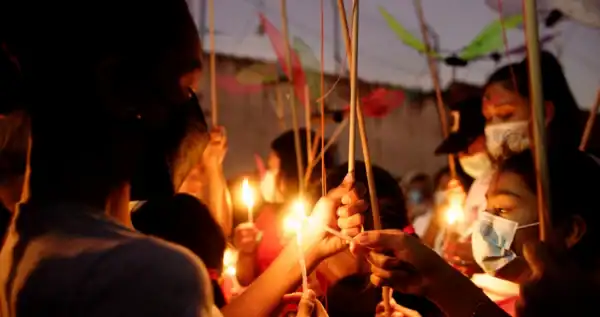
In the end, they train dozens of stilt-walkers, drummers, dancers, and puppet masters. Scores of neighborhood kids, young women, and even a group of grandmothers join the parade. Bodies are painted, torches are lit, and the protest performance begins.
Their comparsa blooms into a fantastic spectacle of fire and acrobatics, swirling with colors and characters. They breathe joy into an otherwise dismal and dangerous arena. An insistent drumbeat calls people out of their homes, and soon throngs of community members watch in awe. The community assembles in awe and revelry, rehearsing a new way of coexisting. Through art, guts, and perseverance, the sisters have ignited a movement, standing tall to deliver their message to hundreds of onlookers.
The girls who helped mount the whole production are forever transformed into artist-activists, identifying as changemakers rather than victims. When normal pathways for resistance and civic engagement are blocked, they deftly and strategically use art to engage the community in peacebuilding. Their motto: “We are the seeds that grew from the ashes.” In calling for justice for the girls murdered in the Safe Home fire, they pave the way for more women to stand up and speak out.
Postscript: Lesli and Lupe, along with their mentor Marta, have joined the film’s impact team to design and deliver screenings followed by facilitated conversations and workshops that bring their story and strategies to communities throughout Central America. In addition to our festival screenings, they have hosted community screenings and workshops in El Salvador, Panama, Mexico, and all across Guatemala, from rural Mayan Villages to the National Palace.