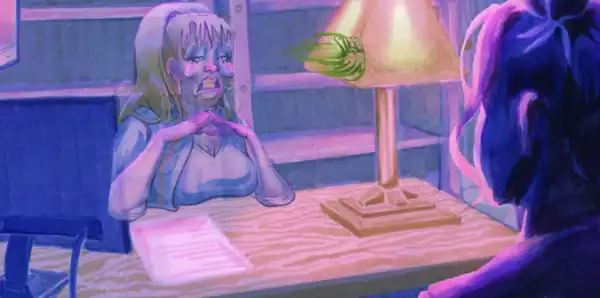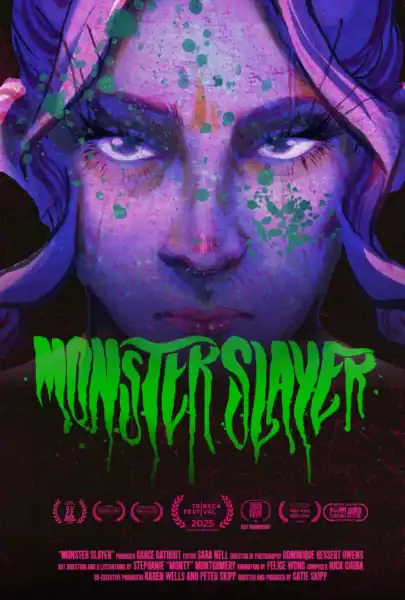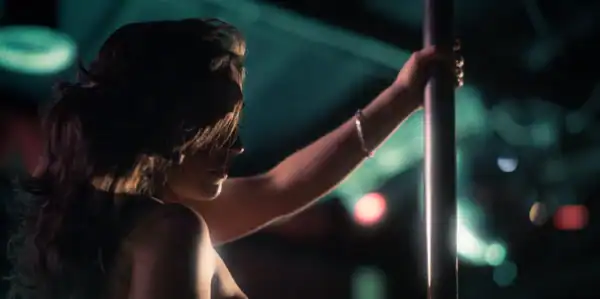
Monster Slayer is a moving-image canvas that tells the story of Stephanie “Monty the Monster Slayer” Montgomery and her journey in the aftermath of trauma, assault, and stigma. Told through Monty’s gripping words and the animation of her visceral artwork and journal entries, the film begins as Monty moves to Los Angeles to pursue her dreams as an artist. She turns to dancing to pay her way, and it, in turn, becomes a part of her art style. However, to most of her clients, Monty was not even human, let alone an artist. To them, she simply was a piece of meat on a stage. When Monty returns to the strip club one last time before quitting, she crosses paths with a new, but all too familiar Monster. This Monster, an ex-bouncer at the club and close friend of the management takes her to the back VIP room, pins her down, and rapes her.
Monty attempts to get justice from the management and the police, but because of the stigma associated with Monty’s work, the laws for a safe workplace and a just legal system fail her. However, when Monty discovers that the Monster raped her friend too, she realizes the cycle must be broken. If she is going to get justice, Monty will do it the way she knows best: through her art.
Monty rents a 48 by 14-foot billboard for a month that sits directly above the strip club where she was raped at the entrance to the I-10, one of the city’s busiest freeways. The mural depicts her as a hero slaying The Monster that raped her. She calls out the management and the police, and reclaims her power. She slays the obvious monster, her rapist, and all of the monsters women and people in marginalized groups encounter. The monsters of self-doubt, the inequity of justice, traditional gender expectations. By refusing to remain silent and sharing her story, we hope that Monty’s words and artwork inspire audiences to confront their own monsters.