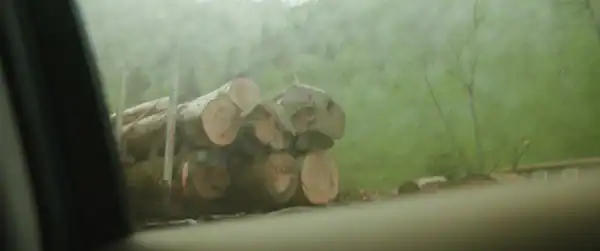
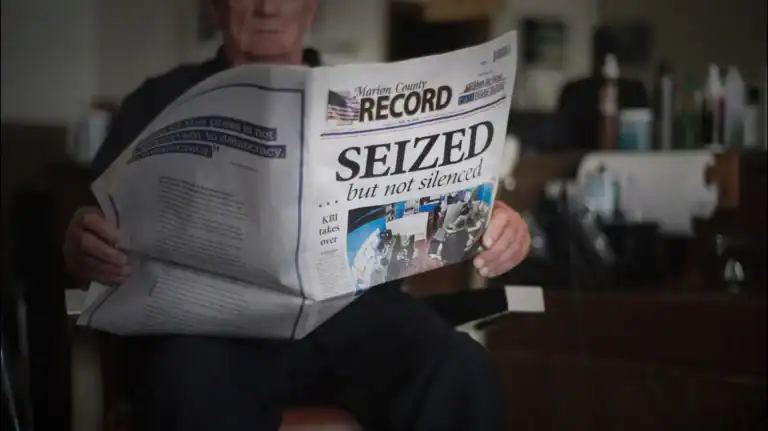
During communism, Romania’s forests were state-owned. But after communism’s fall, Romania’s entrance into the EU ignited a rise in capitalism and resource extraction. IKEA quickly became the largest private landowner in Romania. The timber industry in Romania is notoriously corrupt amidst political volatility; contractors known as the ‘timber mafia’ are reportedly responsible for killing six Romanian forest guards and over 600 incidents of violence against those who tried to stop illegal logging.
Our key character, activist Gabi Paun, grew up under communist Romania, an upbringing that forged a fierce refusal to look away. Through his organization, Agent Green, he wages a meticulous and increasingly dangerous investigation into the logging of some of Europe’s last remaining primary forests, working towards a damning report on IKEA’s role in their destruction. We follow him and his team as they expose this environmental crisis — from high-risk undercover forest investigations to lawsuits and public actions. After multiple attempts on his life, Paun is forced to flee his home and conduct his work in hiding, immovable in his commitment to environmental justice. ‘Wild East’ places Paun’s personal risk and resilience at the center of a story with much wider ecological stakes.
This film captures a critical year for Gabi and his team. Their efforts spurred an international legal review of Romania’s corrupt forestry practices, and Paun is awarded the UN Environmental Champion of the Earth Award for his work. Since 2009, by exposing the destruction and illegal logging of Europe’s last old-growth forests, Agent Green has helped save thousands of hectares of precious biodiversity in the Carpathians (vital for species such as lynx and wolves). We also follow Paun as he returns to Romania to present an explosive exposé on IKEA’s logging operations, and film with him and his team as they meet with IKEA at their headquarters in the Netherlands to discuss the evidence.
Woven between investigative action and advocacy will be Romania’s history and accession to the EU, which confronts both communism and capitalism. This history is introduced through Paun’s childhood memories. Obedience was encouraged under the communist regime, but Paun found injustice intolerable and sought any opportunity to rebel, from throwing a tomato at the dictator’s motorcade. As with many Romanians during this time, nature was the only place Paun felt free.
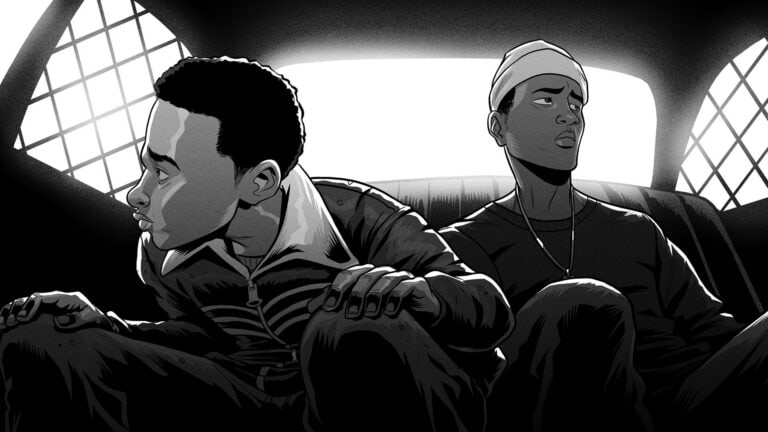
Paun is a magnetic, forthcoming, and complicated character who granted our team full access to follow him through this David-and-Goliath story. In one scene we see him escape the timber mafia, while in the next he’s dancing in his pajamas to Depeche Mode. Over time, we begin to see the toll this fight takes on him as he lives alone in hiding with his sole companion, an elderly dog named Silva.
In Act 2, while struggling with burnout, Paun meets Swedish environmental activist Lina Burnelius, and the story expands beyond Romania’s borders. She has dedicated her life to protecting forests worldwide and is determined to prevent the fate of Sweden’s forests from befalling the last of Romania’s and Europe’s old-growth forests. Gabi and Lina begin traveling across Romania and Sweden together, investigating and comparing IKEA’s forestry practices between the two countries. Paun’s sense of purpose is reinvigorated by having a collaborator and friend in Lina.
In a popular Romanian book from 1975, titled Omenirea la Răspântie, a passage translates to: “There is a rift between man and nature that is deepening with alarming speed. To restore the situation, man must form a new attitude towards nature, based on harmonious relations and not on conquest.” This film delves into this fundamental question of how Romanians, and the world, can reconcile this vital relationship. By the film’s end, audiences will be challenged to reflect on how a global corporation can implicate us all in the destruction of a place that is out of sight and out of mind.