Far From Home began as a way to ensure our young children would have the chance to hear their grandparents’ extraordinary stories in their own words. As TC and Judy’s daughter-in-law, as well as a filmmaker, documenting them was something I could contribute to our family—and a great privilege.
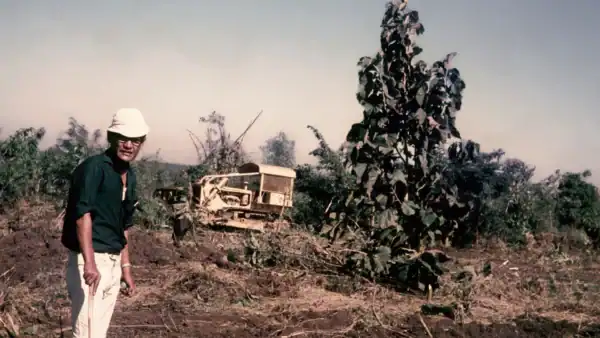
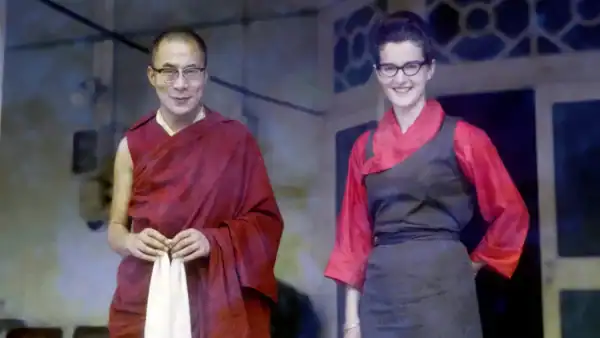
Theirs is a remarkable love story of two people brought together from across the world by a political and humanitarian crisis. Their cross-cultural romance was almost unprecedented in that era: TC – a young Tibetan thrown suddenly into a role serving His Holiness the Dalai Lama and the 80,000 Tibetans newly escaped to India, and Judy – a young volunteer sent to teach and mother Tibetan children in a transit school in the Indian Himalaya. Their commitment to their work and each other would land them in South India overseeing the building of a Tibetan settlement from scratch, out of a jungle – the most unlikely kind of environment for a people from the highest plateau on earth.
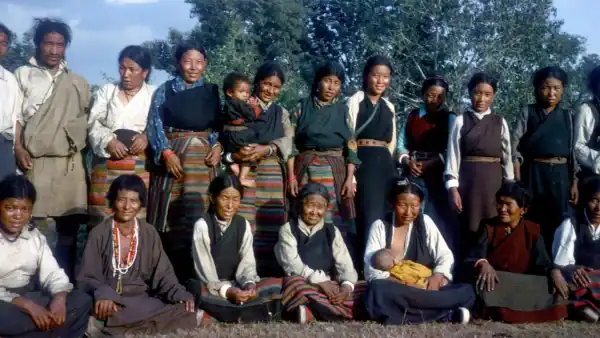
As we digitized their photographs and fragile film reels – untouched in tin cans for more than fifty years – it was clear that TC and Judy had quietly safeguarded a time capsule of the earliest years of Tibetans in exile. TC had long hoped these archives would one day reach younger generations of Tibetans, and he invited me to help realize that wish. What began as a legacy project for our family became something larger: a chronicle of the resilience of a generation who rebuilt their lives after losing their homeland, as well as the enduring partnership that sustained both a family and its history.
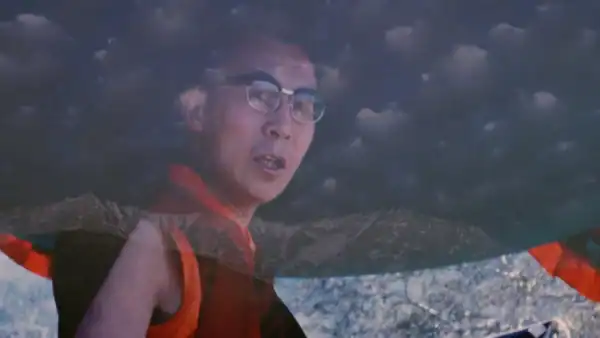
Filmed in Canada, Chinese-occupied Tibet and India, Far From Home unfolded alongside the progression of TC’s Alzheimer’s disease. This is a film that could only have been made from within the family, with their full participation, trust and guidance. As TC’s recollections faded, the footage he shot in the 1960s began to shape the film’s visual language, appearing as fleeting, yet unexpectedly vivid glimpses of memory. For siblings Losel, Deyden and Lhadon, the stories they were raised on became the very compass for their individual journeys and convictions. Their voices, in turn, brought the film a rare perspective, and deeply personal insight.
As co-writer and narrator, Losel—born in the Tibetan refugee settlement of Mundgod, and later able to return to his father’s Tibet—helped reveal how the historical, political and the deeply personal are inseparable. As the film evolved, it became clear that memory is not simply inherited—it must be carried forward before time, illness, or forces of erasure can diminish it.
Today, as China’s efforts to delete Tibetan cultural, historical and political existence intensify, personal archives become historical records, family storytelling becomes an act of cultural preservation.
WHY NOW
As Far From Home reaches audiences, the future of Tibet has become increasingly precarious, and preserving Tibet’s story, more urgent. China’s Ethnic Unity Law, which took effect in July 2026, further expands state policies aimed at forcibly assimilating Tibetans. A vast residential boarding school system continues to separate Tibetan children from their families, disrupting the transmission of language, culture, and identity to the next generation. Yet, since the 2008 Beijing Olympics, foreign journalists have been largely barred from reporting inside Tibet, leaving what is happening there unseen by the outside world.
Significantly, as His Holiness the Dalai Lama enters his tenth decade, the Chinese government has stated it will choose and control the next Dalai Lama, a position firmly rejected by His Holiness, Tibetans and their government in exile.
And yet, this story reaches far beyond Tibet. At a moment when displacement, cultural erasure and authoritarianism are reshaping lives across the globe, Far From Home is a testament to the resilience of displaced people everywhere—and to the families, communities, and nations that help them preserve memory, identity and the right to return home. When His Holiness the Dalai Lama reflected on the generation that remembered a free Tibet, he simply said, “Now most of them have disappeared—gone.” Those words came to define the responsibility we felt in making this film.